
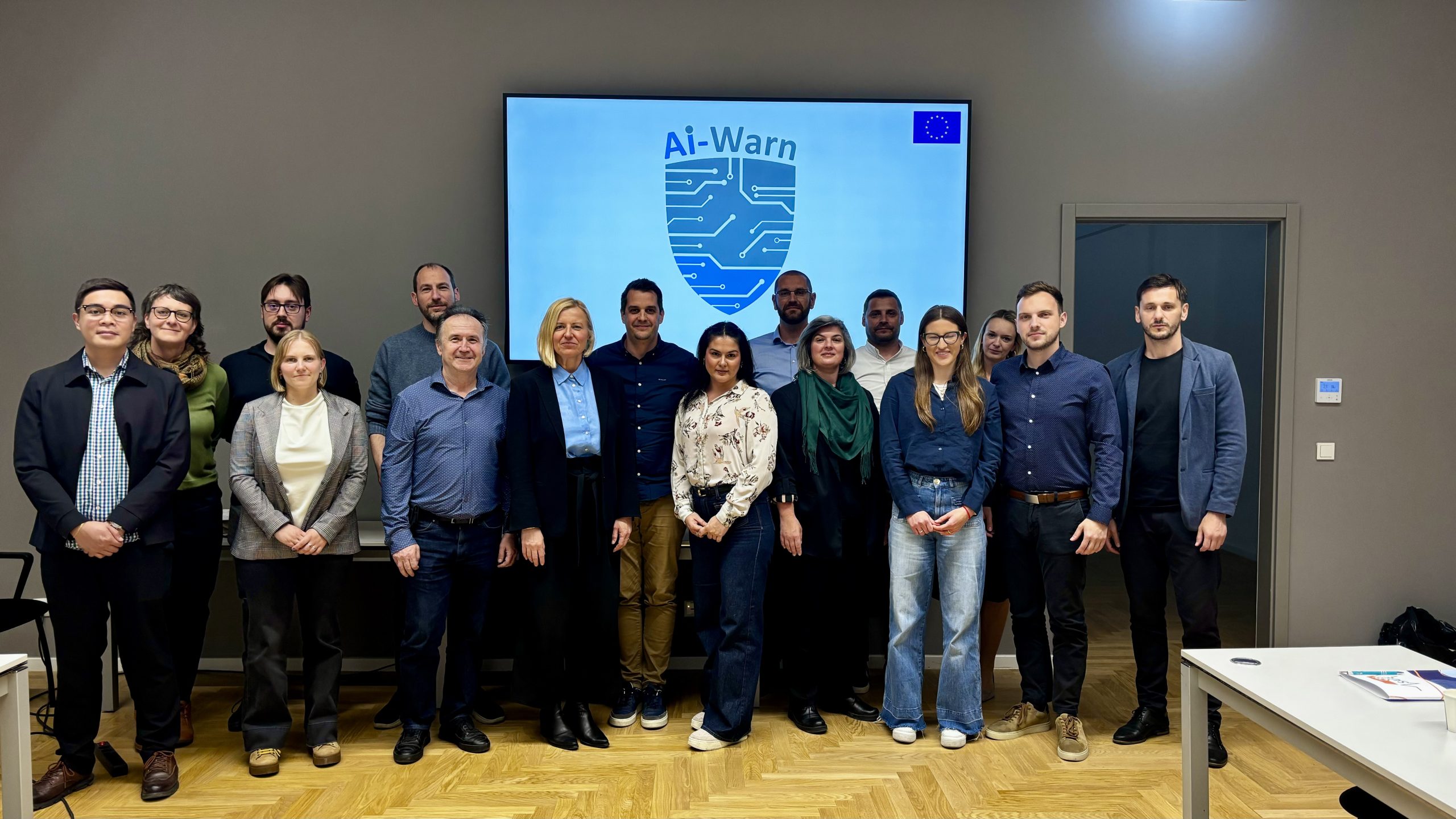
The AI-Warn KoM marks the official launch of the project, bringing together all consortium partners to establish understanding of the project objectives, work plan, governance structure and implementation timeline. It provides the foundation for effective collaboration in developing an AI-driven early warning system for climate-induced hazards affecting critical infrastructure and civil protection
Project Kick-off Meeting
The kick-off meeting of the AI Warn project took place in April and brought together project partners to present the key objectives, work packages, and planned project activities of “Holistic AI-driven early warning system for climate induced hazards in critical infrastructure and civil protection.” During the meeting, the organizational structure, communication channels, timeline for implementation, and initial technical and administrative steps for developing the integrated AI early warning system for climate-induced threats to critical infrastructure and civil protection systems were defined.
At the kick-off meeting, key elements of project implementation were successfully agreed upon, including a detailed activity timeline, the distribution of tasks among partners, and responsibilities for the implementation of individual work packages. The project management structure was defined, and communication and coordination mechanisms were established, along with confirmed technical and administrative procedures necessary for effective project implementation.
Partners aligned on the working methodology, agreed on deadlines for the initial project activities, and defined the next steps for developing the AI early warning system for climate-induced risks to critical infrastructure and civil protection.
The project also involves field trials in Brussels and Dubrovnik to assess the effectiveness and practicality of the developed early warning system on the ground (in-situ), and the specifics of these trials were agreed upon at the meeting.
By using advanced AI technology, an integrated early warning system will be realized, enabling timely detection and management of climate-induced hazards, thereby improving the resilience of critical infrastructure and civil protection systems. The meeting enabled a shared understanding of the project’s objectives and laid the foundation for effective cooperation among all project partners throughout the project’s implementation.